Friday, September 29, 2006

Now It's Your Turn

You can still make a difference. The State Engineer with the Nevada Division of Water Resources has not yet made his ruling. You can still submit comments about the water grab in the US mail. You have until the end of October, 2006.


Let them know how you feel. Let them know what you think needs to be done. Hey, if you like something I've printed on my blog, go ahead and copy it and send that to them.


Let your voice be heard. This is essentially your last chance to see that the State makes the right decision.


Please... write to Tracy Taylor.

You can use this format:


Tracy Taylor, P.E.

State Engineer

Nevada Division of Water Resources

901 South Stewart St., Suite 2002

Carson City, NV 89701


Dear Mr. Taylor:


Here are my comments regarding the Southern Nevada Water Authority water applications in Spring Valley, White Pine County, Nevada. Please make my comments part of the official record, and consider them when making your decision.

Thank you.

..............................

..............................

..............................


Your Name

Signature

Date

Address

Town/State/Zip

Phone/email (optional)

Monday, September 25, 2006

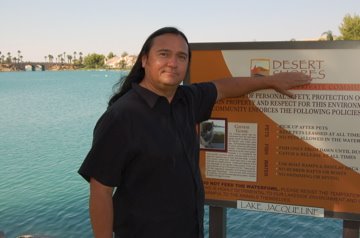
Las Vegas has a number of man made lakes that contribute significantly to the evaporative losses that Southern Nevada Water Authority has to deal with.

As I have mentioned; if Southern Nevada could reduce its evaporative losses from luxury water use, they wouldn't need to take water from the rest of the state.

Offshore Desal Is Better

In my video commentary to the Nevada State Engineer concerning the Southern Nevada Water Authority water grab applications, I stated that I would be sending them more information about desalination and new developments. This is what I sent:


Science magazine has just reported that:

A water desalination system using carbon nanotube-based membranes could significantly reduce the cost of purifying water from the ocean... The new membranes, developed by researchers at Lawrence Livermore National Laboratory (LLNL), could reduce the cost of desalination by 75 percent, compared to reverse osmosis methods used today”

The researchers estimate that these membranes could be brought to market within the next five to ten years. They claim:

"The challenge is to scale up so we can produce usable amounts of these membrane materials” ... and the fabrication process is "inherently scalable."


Actually, desalination is already much cheaper than just a couple of years ago. A company called Aqualyng is claiming energy consumption rates of 2.0 kWh/M3 – half that of some others.


So far, to my knowledge, SNWA has not even considered a fleet of offshore, wave powered, desalination barges.


Back when Southern Nevada Water Authority (SNWA) compared a pipeline to desalination, they assumed that a Big Factory type of desalination plant would be the best option. Typically, due to economies of scale, bigger plants generally make cheaper fresh water. But, SNWA made their comparisons before new membrane designs, new wave power generators, and lower energy use desalination units (for ships) were available. In other words, things have changed significantly – quite recently. Nowadays, a Big Factory type of plant isn't nearly as good an option as designers once thought. And mass produced smaller plants, operating offshore, might be a much better option.


A Big Factory desalination plant has a number of costs, impacts, and risks that can be avoided by utilizing a Barge Armada of desalination units with wave generated power. For instance:


  1. A big plant is a big commitment, with the risk that you overbuilt – or better technology will leave your plant obsolete. Whereas, a fleet of small, offshore barge desalination plants can be built as needed, utilizing the latest technology.

  2. A big onshore plant would need acres and acres of beach front property to build a massive facility, canals, and pipelines – and typically, a massive onshore coal fired power plant (which has been the only option considered). A barge armada would only need dock front property to house the facility to assemble and repair the desalination units and wave power generators – just big enough to hold a few barges.

  3. Construction and maintenance costs for an intake canal for a big onshore desalination plant would likely range from $5 million to $40 million. But, barges would need no intake canal – since the barges would be about 3 miles out to sea.

  4. An onshore plant would require more pre-filtering than offshore barges.

  5. The costs for a pipeline to distribute tons of brine offshore would be about 10% of construction costs for a big onshore plant. However, since the barges would be already offshore, and the plants on each barge are small enough not to effect local sea salinity, no pipeline would be necessary.

  6. Industry experts estimate that power expenses will amount to about 30% of total costs for a big, onshore desalination plant. But, the risk in projecting these estimates is high. The price of coal will likely go up. The price of electricity will likely go up. And, just in case you don't remember Enron, these expenses could go way up, fast. If, however, you generated your own power, from waves; you're set. The price of waves will always be free.

  7. As mentioned earlier; new, lower pressure Reverse Osmosis membrane technology has been developed that could lower the energy costs of desalination by 75%. But the membranes, so far, are small. As they are scaled up, Big Factory desalination plants would have to wait the longest for the technology. Conversely, small desalination plants would be the first to benefit. The spare electric power generated by the wave generators could then be sold, turning power costs into power profits.


There's more. A Barge Armada is far less vulnerable to earthquake, tsunami, and terrorist damage. They also have far less negative impacts on beach communities. Giant sea snakes and boats far off in the distance would be far more welcome than a big factory plant and a big power plant.

Saturday, September 23, 2006

The Water Grab on Eyewitness News

Las Vegas' CBS Eyewitness News aired two very informative reports on the water grab - and some of the alternatives Las Vegas has.

Here are the links to the reports:

Rural Residents Battle Southern Nevada Water Grab

Water Proposal Has Many Skeptics

Monday, September 18, 2006

Desalination is Better than Desertification


This video is of my input to the Nevada State Engineer concerning the Southern Nevada Water Authority applications for Rural Nevada water - the water grab.

Click here to see the video.

Is the Department of the Interior corrupt?

So, why did the Department of the Interior order the BLM and National Park Service to drop their protests (based upon science) of the Southern Nevada Water Authority's applications for Rural Nevada water rights? And why did they order the Bureau of Indian Affairs to drop their protests without even consulting us Indians?


Did they think that they somehow understood the big picture better than those of us who deal with these issues every day? Did they assume that all of these protests should be dropped, even though the Nevada State Engineer allowed them?


I don't think so. In fact, the truth may just show us how corrupt our government has become.


The New York Times has reported that “the Interior Department's chief official responsible for investigating abuses and overseeing operations accused the top officials at the agency on Wednesday of tolerating widespread ethical failures, from cronyism to cover-ups of incompetence.”


Check out this article


Sunday, September 17, 2006

Freedom Should Not Mean Corporate Anarchy 3

Part 3 of 9


There's a reason these companies want to put their power plants as far away from their own communities as possible.


This is burning coal. Where there's fire, there's smoke. Face the obvious fact, burning coal can never really be clean. Air pollution from dirty power plants cause nearly 30,000 early deaths in the U.S. each year. And, guess what? They'll be burning cheap, dirty coal – in the biggest power plant in the state's history. Rural Nevada can expect filthy skies from methane, oxides of nitrogen, carbon monoxide, ammonia, sulfur dioxide (which leads to acid rain), and of course, carbon dioxide (which leads to global warming). We're not talking just a little carbon dioxide here. Coal fired power plants accounted for one third of the U.S. total carbon dioxide emissions. Coal emits 29% more carbon per unit of energy than oil, and 80% more than natural gas. Just a typical, average sized coal fired power plant emits, in a year, as much carbon dioxide as burning 160 million trees.

That's right, we're not just talking about ruining the environment of Rural Nevada (which we might already be beginning to see with the infestation of the pine beetle, no longer kept in check by our cold winters of the past). No, we're now talking about our American Government ignoring the Kyoto Treaty to limit greenhouse gas emissions, which the rest of the world has agreed to. We've submissively allowed our big businesses to go full speed ahead at cranking up the world's thermostat. We've already seen:

more destructive hurricanes

polar ice caps and permafrost that are the smallest on record

simultaneous forest fires and wild fires worldwide

numerous species being driven closer to extinction,

including extensive damage to the world's coral reefs (of which only 30% are still considered healthy)

an increase in the size of ocean "dead zones"

and oceans that are becoming more acidic and rising 50% faster than in previous decades.

This all sounds worse than the scenario from any disaster movie. But there's more. Of the 928 peer-reviewed scientific journal articles about global warming published between 1993 and 2003, none ... none of them cast doubt on human caused global warming. Yet, of the 3,543 “hard news” stories between approximately the same time period, 53% of them cast doubt. We've been systematically lied to about how bad things really are.

And yes, disaster fans, there's even more. After NASA released data that 2005 was essentially the hottest year on the planet, ever on human record; “The top climate scientist at NASA says the Bush administration has tried to stop him from speaking out since he gave a lecture last month calling for prompt reductions in emissions of greenhouse gases linked to global warming.” Think about this. You should be enraged! Money and power should never be more important than the future of life on this planet! We have to let the neo-conservatives know that winning a scorched Earth isn't really winning.