Monday, February 05, 2007

Scoping Meeting Announcement!!!

The Bureau of Land Management (BLM) is asking for the public's input in the preparation of an environmental impact statement (EIS) for the Ely Energy Center, a coal-fired power-generating catastrophe.


Please. Please. Please... Go to the meeting.


In Ely; Wednesday, Feb. 7, Bristlecone Convention Center, 150 6th Street.


I will be going to the meeting in Alamo, so I won't make it to the Ely meeting.

If you may, please ask these questions for me:


How many tons of coal per day will this plant be burning?


The LS Power pamphlet states that they will be saving 80% of their water. Sierra Pacific claims that they will only save 50%. Will you explain the discrepancy?


How much water from Duck Creek Basin are you attempting to attain?


How do you plan to dispose of your by products?

What size sludge pond will Nevada be left with?


A representative from Sierra Pacific has claimed that your company will not be selling power to Southern Nevada Water Authority for their Groundwater Development Project (Eastern Nevada water grab pipeline network). Locals suspect that this is a lie. We suspect that Sierra Pacific will just sell the power to a middleman, who will then sell power to the Southern Nevada Water Authority. Can you convince us otherwise?


So far, we feel that we've been given the “really big sale” promotion. Sierra Pacific has been telling us how much we'll save – but haven't been willing to tell us how much this will actually cost us. In units we can understand, how much air pollution will this power plant generate?

Nitrates

Sulfates

Mercury

Lead

Arsenic

Vanadium

Barium

Zinc

Nickel

Hydrogen Fluoride

Hydrochloric Acid

Selenium

Others


If Sierra Pacific acquires water rights to White Pine County water, what will happen to those water rights once the power plants are retired?

Are there any laws to prevent SPPCO from selling the water acquired for generating purposes?


Thank you

Tuesday, January 30, 2007

Public Hearing

The Nevada Division of Environmental Protection will be holding a public hearing concerning the coal fired power plant just north of Ely, Nevada - brought to us by White Pine Energy Associates/LS Power/Dynegy. This may be our last chance to speak out about this huge mistake.

The hearing will be held on Thursday, March 8, 2007 - in Ely, Nevada at 6:00 pm at the Bristlecone Convention Center. Please be there.

click here to see the public announcement


Sunday, January 21, 2007

No Shoot Foot video documentary


Script from No Shoot Foot (with links to sources):


Title scene – Spring Valley


Nevada Ghost Towns

Nevada is full of boom and bust ghost towns – places that ran out of the resources that sustained them. The miners who once lived in these towns preferred to move on to the next mine rather than learn how to live sustainably there. That was their choice. And they could. There were other mines... But what happens when there are no other places to move to? Humanity has populated almost every livable place on this planet. We have run out of desirable places to move away to. And if the big cities have their way, there will be even fewer places in the future. Like the ancient city/states in search of conquest, they wish to drain Rural areas of what resources they have. And now; in return, send them their cities' waste, their industrial waste, and even their nuclear waste.


Ely homes

One of the towns that didn't become a ghost town in Rural Nevada is a small community in White Pine County called Ely. About 5,000 people live here – plainly only a tiny fraction of the populations of the cities hundreds of miles away. This community's remoteness has served both as a hindrance and an asset over the years. Recently, Ely's economy has been doing rather well. People have started to move here to breath the clean air, enjoy the natural surroundings, and get away from the high stress lifestyle of the cities.


Ruth Open Pit Mine

There is also a profitable mine nearby. In the past, only minerals were valuable enough to take, and their extraction only ruined limited sections of the local environment.


Shoshone Ponds in Spring Valley

and Steptoe Valley Power plant site from Duck Creek Basin

But, times have changed. Las Vegas wants Rural Nevada's sparse water supplies, and power companies want to take even more water to operate up to four coal fired power plants – just in Ely's White Pine County.


Nevada/Vermont maps

The total area effected by the water grabs will approach the size of Vermont. If you consider land effected, this will be the largest ground water grab in the nation's history.


Map of water grab intentions (excluding Spring and Snake Valleys – and valley effected by the coal fired power plants)

Southern Nevada Water Authority wants to drill for what little water the high deserts of Rural Nevada have accumulated over tens of thousands of years and pipe it to Las Vegas, a city right next to the Colorado River. And Sierra Pacific wants to build a coal fired power plant to run the pumps. Southern Nevada Water Authority, LS Power, and Sierra Pacific claim that turning Rural Nevada's valleys into polluted dust bowls is the best option. They infer that it is the cheapest and most profitable. But for whom?


North Spring Valley

Taking Rural Nevada's water and leaving toxic waste can't possibly be profitable, in the long run, for Rural Nevada, the State of Nevada, or the West, for that matter.


Glenn Siding

This is Glenn Siding. It is near the primary location for where Sierra Pacific and Nevada Power intend to ship in train loads full of coal for their power plant. LS Power (now Dynergy) intends to build another coal fired power plant just a few miles north of here. As of now, this area is nothing more than a wide spot on a retired railroad track – hundreds of miles from any city. The railroad ties have rotted, the steel is rusted, and much of the rail will likely not be usable. Even the base needs extensive work. Repairs will cost a million dollars a mile.

There is no coal here. There is no trained work force. There is no industrial infrastructure. And most importantly, there are virtually no customers. Of course, the utility companies see this as a positive trait. There are very few people here to stop them.

As you can see in this scene, even in the dead of winter there is plenty of wind and sun – which, of course, would not have to be brought in by train.


Antelope

Although the people who wish to exploit this area want us to believe that Nevada is essentially a wasteland, the locals know better. This heard of antelope was filmed on the exact location of the proposed power plant. Not only would they lose their home, but also the water that feeds the plant life they feed on.


The winter habitat for herds of elk and deer are also at risk. With the coal fired power plants, Rural Nevada will have to endure yet another water pipeline network, into three more valleys. Sierra Pacific claims that they will utilize “only” half the water of a conventional power plant. But... LS Power claims that they will only use 20% - "only" about a billion gallons a year. Remember, windmills would use none.


Elk

Sierra Pacific claims that they will “only” require 8,000 acre feet of water per year – for their first power plant. That would only support over 40,000 people – or an ecosystem, as it does now.

The physics of drawing water from wells is simple:

Like a well in an aquifer, no matter how deep you put a straw in a cup, the water drops at the top. This kills the native vegetation in the valleys – which also kills what feeds on that vegetation.


Steptoe Valley (looking towards the LS Power plant site)

What the utility companies don't want us to know; is that if we allow even one of the coal fired power plants, we may as well say goodbye to most of the herds of antelope, elk, and deer that live here in the Winter.


Website Titles

But, that may be the least of our worries. Increased carbon dioxide in our atmosphere is already increasing the acidity of our oceans, causing wild fires worldwide, perilously changing our weather patterns, putting as many as a million species at risk, and endangering the world's coastal cities with total destruction.


Beetle infested trees, snow covered mountains, Brian Head

This is a pine forest in Rural Nevada. As you can see, the pine beetles have already killed a significant portion of the forest. Scientists believe that at least part of the reason the pine beetle are such a scourge now is because of Global warming. 2006 was the warmest year in recorded history in the United States – 2.2 degrees warmer than average. Our winters are just not a cold as they used to be – and consequently, not as many pine beetles die off. This destruction isn't just happening in Nevada. It's happening from Arizona to Canada. Brian Head, Utah used to look like this. Within 10 years, all of this species of pine were dead. Our Douglas Fir likely have less than 10 years left to live. And, of course, more carbon in the atmosphere will likely reduce that window.


Coal fired power plant at Page, Arizona

They tell us that the new coal fired power plants are not like coal fired power plants any more. They tell us that they now have “clean” coal – which takes the pollution out of the air and puts it in a sludge pond. They tell us that they will be able to burn over 10,000 tons of coal a day, per plant – without using the latest technology, with no significant consequences. And they tell us that since the cost of building coal gasification is 20 percent higher, it's just not practical yet. Who are they?

We will have a hard time knowing who these people are, because the Energy Policy Act of 2003 allows power companies to (act like Enron and) set up multiple subsidiaries to blur their financial reports.


Dick Cheney and his Energy Advisory Team

What we do know is that two Peabody Coal executives were named to President Bush's Energy Advisory Team after coal companies gave $900,000 to Republican coffers. We also know that four days after Vice President Dick Cheney announced the administration's new energy plan, Peabody, a privately held company for 120 years, went public, and sold stock for $420 million, $60 million more than expected.

Peabody Group is the largest coal company on the planet, and they presently lease almost a third of the mines in the Powder River Basin – where the Ely power plants will get their coal.

You may not be familiar with Peabody's history of coal mining on the Navajo Reservation. But, the Navajo and Hopi people will never forget.


Dying forest on the Navajo Reservation

They have witnessed their water wells drained. Their springs have dried up. And their forests are dieing. Peabody Coal took 4000 acre feet per year. This was only half of what just one of the four Ely coal fired power plants will take!

Peabody supplied the Navajos' coal to the Mojave Power Plant, in Laughlin – which was part owned by Nevada Power – now a subsidiary of Sierra Pacific Resources.

The intriguing aspect of these relationships are financial deals with a big New York bank; Lehman Brothers. Nevada Power and Sierra Pacific have both been dealing with Lehman Brothers. Recently, Lehman Brothers loaned Sierra Pacific Resources $335 million dollars in unsecured notes. And yes, this is the same Lehman Brothers that is the largest investor in Peabody Energy Co.

In case you didn't know, Lehman Brothers does not have the best reputation on Wall Street. They were recently charged with violations of the 1933 Securities Act, and agreed to pay $222.5 million to settle a class-action lawsuit brought by mislead investors of Enron.


Laughlin coal fired power plant

Part of the reason Sierra Pacific and LS Power want to build coal fired power plants near Ely is because the Mojave Generating Station, a coal fired power plant in Laughlin, was shut down. And why was it forced to shut down?... Because it was one of the dirtiest coal fired power plants in the country. And the owners, including Nevada Power, would not install the pollution control equipment required – even though they had promised to six years earlier. The plant now sits idle. Its toxic sludge sits nearby, waiting for the day the containment barriers leak, and its toxic contents leak into the Colorado River. Ely is next.


Hurricane Katrina

But, Ely isn't the only place environmentally at risk.


Powder River

Those of us living in Nevada haven't thought much about the ranches in Wyoming that now have mines on them. The ranchers there didn't have the mineral rights to their property. Now, their ranches will never be the same. We need to pay attention to their predicament. The environmental destruction there is an indicator of the attitudes of this industry and our economic system. By law, a corporation has to maximize its profits for its shareholders. But, where are the laws that say its customers or the community have to be considered? Where are the institutions that were supposed to protect us? Maybe the Department of Interior's own inspector general, Earl Devaney can explain. He recently testified that “Short of a crime, anything goes at the highest levels of the Department of the Interior.”

And things could get worse. There already has been an effort in Congress to set up a coal monopoly in the Powder River Basin.

Back in 2003, an amendment was offered in the House of Representatives to the “Energy Security Act of 2003” that only failed by four votes. H.R.6 would have, in the words of (ranking Democrat) Rep. Nick Rahall; “These provisions would allow coal producers with Federal leases to seize unlimited additional Federal coal lands without competitive bidding and be relieved of paying royalties owed to the American taxpayer ... The net effect of these provisions would be the creation of a Federal coal producing monopoly in the Powder River Basin.”


Power lines with Southern Nevada Water Authority complex in distance

So, with the possibility of astronomically rising coal prices, why aren't the utility companies worried about hikes in the price of coal? Because, ultimately, they won't have to pay them - the ratepayers will. And more insidiously, increases in fuel expenses are actually a good excuse for the utility companies to raise their rates.


Profit charts

Here is a hypothetical example: Let's say a unit of some fuel costs a dollar. For sake of ease of calculations, let's say that that dollar's worth of fuel results in two dollars worth of electricity. Obviously, these aren't real numbers. But this example is to show you why the power companies may want the price of fuel to rise. Let's say the price of this fuel goes up by 10 percent – 10 cents per unit. The power company would be thus justified in raising their electricity prices too. Let's say they raise their prices by 10 percent also. But 10 percent of 2 dollars is 20 cents. In this example; for every 10 cents fuel price rise, the power company gets an additional 10 cents of profit! This could add up to hundreds of millions of dollars, when your selling billions of dollars of electricity. Of course, in the real world things aren't this simple. But don't be surprised if this extra profit potential might be the hidden reason power companies aren't all that interested in free fuel for their power generation.


Global Warming photos

One other thing. You're tax dollars are helping the power companies to build these coal fired power plants. "Between 1950 and 1997, the coal industry received more than US$70 billion in federal subsidies, or nearly $1.5 billion a year. In 2005, Congress approved an additional $7.8 billion for coal." Your tax money is going to subsidize the fossil fuel industry – while alternative energy inventors, with the better ideas, are systematically excluded. Our tax money is being spent to perpetuate an antiquated, polluting, and price gouging energy system – and that's just how old money wants it.


China air pollution

So, just how bad does our situation have to get before Americans act? Does our environment have to be worse than China's before we decide that we're environmentalists. You can wait. But, what's the point in being an environmentalist after our environment has collapsed. Many scientists are now saying that we have to act on Global warming within the next ten years, or the Earth won't be able to heal itself. And when they say we have to act, they mean you.

We are the customers. We have the influence, if we choose to use it. If you are willing to commit to safe and sustainable power, let the utility companies know. Write them. They need to know how many customers they might lose if they commit to the construction of unsafe and unsustainable power. If enough of us are willing to do what it takes – even build our own power generators, if necessary; the utility companies cannot ignore us.


Wind map of Nevada showing Spring Valley as quite windy

We have better options. Options that utilize the kinetic energy of the Earth. Wind, sun, geothermal, and wave power are free for the taking. The initial costs might... might be higher. But... You're probably not driving the cheapest car you can buy. You're probably not living in the cheapest house you can find. You're probably not eating the cheapest food. Why would we even consider decades of dirty, dangerous, and even ecocidal power generation just because our utility companies want the highest profits at the cheapest up front cost?

New designs continue be developed that increase windmills' efficiency, reliability, and decrease their costs. Energy storage systems, utilizing technology such as flywheels or compressed air, are becoming even more practical. And don't believe the hype that fossil fuels are always cheaper.

As an example; Xcel Energy, a local utility in Colorado, has already charged less for wind generated electricity than that generated from fossil fuel. We have seen gas prices rise. We have seen natural gas prices rise. We will see coal prices rise. The price of wind and sunlight will always be free. Investors have recently realized this.

The stock market value of all of the larger renewable energy firms has recently doubled.

Part of the reason for investor enthusiasm is that new alternative power technology keeps being developed. Substantial advances in photo voltaic solar cells have been made recently. Solar energy is now cheaper and more practical than ever. The company Nanosolar now has a factory that will mass produce solar panels that will generate electricity cheaper than coal or nuclear.


Solar panels on rooftops

Of course, widely distributed solar power generators don't lend themselves well to the utility companies' desire to mass produce and control the distribution of power. The best place to put solar panels is on rooftops, because no additional land is required. But if everyone were to have solar panels on their roofs, generating their own electricity, there would be less of a need for big centralized power companies. Consequently, you can expect conventional power companies to tell us that distributed power generation is impractical, no matter how it's generated. They want to control supply.

A new type of power company has grown out of this dilemma. This power company, Citizen, rents solar cells. Citizen Corporation pays for, installs, owns, and operates the solar installation. All you are required to do is pay for the electricity generated from these panels, at a fixed rate that is at or below your current electricity price.


Coral Bleaching

As the price of electricity generated by fossil fuels continues to rise, the public will become ever more willing to commit to solar energy. In fact, this may be the unintended driving force behind the conventional utility companies' desire to generate the cheapest power possible, no matter what the environmental cost. Evidently, coal can't compete any other way.

The big risk for conventional utility companies is that, by committing to decades of coal fired power, they will be stuck with antiquated technology. As the price of coal rises, which is virtually inevitable, they could lose billions. Unless, of course, the American government has guaranteed their power plant loans or subsidizes their industry even more. If so; the American public will be stuck with the bill for the utility companies' poor decisions... The truth is; we already are.

You may be familiar with the term corporate welfare. These big business' hidden agenda is for taxpayers and ratepayers to burden the risk.


Mountain top removal coal mining in Virgina

Conventional business thinking in our economy is to privatize the profits, and socialize the costs. Conventional economic thinking is to only be concerned with the bottom line of a myopic and outdated accounting system.


Spring Valley

Conventional thinking even has Southern Nevada Water Authority convinced that they should drill for 200,000 acre feet of water a year in the desert, pipe it for up to 250 miles, and power the whole operation with coal fired power plants. Conventional thinking has us draining our nation's water reserves, intensifying Global warming, and destroying our rural areas. It's time to start thinking outside of the box. Someday, short term profits for a few at the expense of our communities will be a crime. Someday soon, coal fired power plants will have to pay a carbon tax. Unfortunately, Rural Nevada can't afford to wait for someday. But, the good news is this is just a matter of choice. All our society has to do is make the commitment to do what is right.


Thermal Solar Power/Desalination plant

A thermal solar power plant is being built in Boulder City, Nevada by a company called Solargenix. This solar power plant does not rely on photo voltaics. Instead, concentrating mirrors focus light onto oil that heats water to steam in a conventional turbine – resulting in “the lowest cost solar energy that can be produced today.” What is especially appealing about this type of design is that the water can also be desalinated. If Nevada were to install these thermal solar power plants along the coast, we could supply California with desalinated water in exchange for a larger allotment of the Colorado River – which could eliminate Southern Nevada's need to take water from Rural Nevada, and also the need to build coal fired power plants.


Cruise ships

Solar desalination is not the only option, though. For years, reverse osmosis desalination has been accomplished routinely on cruise ships. The equipment is already available for offshore desalination for coastal cities.


Spanish Desalination Plant

In fact, an offshore desalination plant already exists off the coast of Greece and on islands in the Baltic Sea and off the coast of Spain. Here in the US; an offer to build offshore desalination plants on ships off the coast of Monterey, California, is already being considered.


Saudi Desalination Plant

Conventional desalination plants are built on the coast, usually with their own dedicated power plant nearby. The primary draw back of reverse osmosis desalination is that the process presently requires a lot of energy. But these limitations are being overcome.


New Reverse Osmosis membranes – Desalination plans for Monterey Bay

New breakthroughs have already been published in scientific journals. In fact, by the time the proposed Groundwater Development pipeline network into Rural Nevada is built, it will likely be cheaper to desalinate sea water. Especially since deep wells often draw saline water, which might add the cost of desalination to the cost of drilling, pumping, and piping Rural Nevada's water away.


Desalination unit - Wave power generators

If Southern Nevada were to build a fleet of desalination units on barges with electricity from wave power generators, not only would their costs be stable for decades to come, but they would sometimes have excess power to sell. Most importantly, however, there would be far less damage to the environment.


Schell Creek Range

We know that there are only so many natural places left on the planet. There are only so many natural resources left to exploit. We are starting to realize that allowing others to squander the last of our natural wealth for a quick profit is not best for us in the long run. Its time to vote with our pocketbooks.


Google Complex – solar panels – windmills

There is a trend developing. Since Google installed photo voltaic solar panels on their office complex, other companies have noticed the good will the company has received.

Wal Mart is now considering installing as much as 100 MW of solar generated power over the next five years. Some may accuse Wal Mart of just trying to improve their tarnished image. But... every company should be trying to improve their image. The most important asset of a brand is its likability. And people like companies that live to a higher standard than they themselves do. Wal Mart has realized that solar panels on the ceiling speak louder than any radio ad, solar panels say more than any newspaper ad, and what they say – is that Wal Mart cares. Any company can follow the Google example, and the result is the same; a more likable company. There is a trend developing that companies could join – to improve their image, by doing something worthy of improving their image. Solar panels and windmills could end up being like billboards, without words, that undeniably say to the public; we intend to do everything we can to make the world of the future a better place.

There is hope, if we take the initiative.


Saturday, December 23, 2006

The Biggest Water Grab In Our Nation's History

The Owens Valley water grab (by Los Angeles) may be the most infamous so far. But if you consider the land effected, the Rural Nevada water grab by Las Vegas is much bigger. The land area where water will be taken approaches the size of Vermont. Over 100 aquifers will be effected.


Southern Nevada Water Authority (SNWA) has given the water grab the Orwellian name of the Groundwater “Development” Project (GWD). The Bureau of Land Management's (BLM) states that SNWA has applied to “convey” approximately 200,000 acre feet per year of groundwater from Clark, Lincoln, and White Pine Counties. And the coal fired power plant SNWA wants, to power the many GWD pipeline pumps, will take another 8,000 acre feet from valleys even further north. If you're familiar with river flow capacities, this may not sound like a lot. For example, the Colorado River flow is about 7 million acre feet per year. But remember, there are no rivers here. This is the desert.


So, why would Las Vegas want to take water from the desert? The answer is long and complex, but it comes down to; because they can. However, there may actually be a hidden motive; that's where the biggest profits are – even though there is a better option.


We have a motive:

SNWA has already agreed to transport water from Rural Nevada to a new housing development, Coyote Springs, for 5000 dollars an acre foot. SNWA may not charge that to all of their customers, but we can utilize this established price for rough calculations of potential revenue. SNWA intends to pump water from Rural Nevada for at least 70 years. OK. Here are the numbers:


200,000 acre feet/year X 5000 dollars/acre foot X 70 years = 70 Billion Dollars


And SNWA estimates that the pipeline network will cost 2 billion dollars. Damn! A billion dollars a year of potential profit. This makes hitting the lottery look like chump change! Talk about a temptation. Maybe it's enough of a temptation to lie about this being the best option – for the customers. Maybe it's even enough of a temptation to lie about the real cost of the pipeline.


Will the GWD project really cost 2 billion dollars? An independent evaluation, conducted by Mifflin and Associates, estimated the project at from 12.4 billion dollars to as much as 20 billion dollars! That's up to ten times what SNWA is telling us. If the million or so tax paying residents of Las Vegas heard that number, they might choke at the thought of having to pay 20,000 dollars per person (for water may not be there).


Worth noting is that SNWA is a quasi-municipality. Windfall profits shouldn't be an issue for a municipality like it would be for a corporation. Yet, we don't know what might happen sometime in the next 70 years. Just because nobody is talking about privatization, doesn't mean nobody's thinking about it. Even if right now; nobody intends to get filthy rich off of Nevada's water, somebody will eventually try – and the stage is being set.


Not only is Las Vegas growing, but so is Pahrump, Jean, and Primm. SNWA may not legally be able to charge for Rural Nevada's water, but as mentioned with Coyote Springs, they can charge for delivery. And if a private company can be a part of that, there is potential here for an immoral amount of profit – at Rural Nevada's expense.


We have a far less environmentally disastrous alternative:

One thing that hasn't been talked about much is the fact that deep water aquifers tend to have a lot of dissolved salts in them. There could be substantial additional costs for water treatment. The Nevada groundwater from deep aquifers may have to be desalinated.


Desalinated? Hey wait a minute. If we're going to have to desalinate the water anyway, why not just desalinate sea water. Las Vegas could build desalination plants off the coast of California and trade that water for a bigger allotment of Colorado River water. This has got to be cheaper than drilling, pumping, piping, and desalinating Nevada water.


So, why wouldn't SNWA want to desalinate sea water? The answer is simple. Why pay to desalinate sea water, when you can get paid for taking water from Rural Nevada? Why increase the supply of fresh water, when you can claim that water is scarce? Why go begging to California, when you can push Rural Nevada around?


Considering the legal morass we call water law, SNWA's options may be limited, however. California is presently taking three times its allotment of water from the Colorado River, and is fighting tooth and nail to keep it. I've heard rumors that Californians are even watering their dry lake beds (to keep dust down – and air quality standards up – to get highway funds). California farmers are taking as much water as they want with impunity – and they somehow have control over Hoover Dam's floodgates. Lakes Mead and Powell are being emptied because of this water greed. But suspiciously, all of the lakes downstream of Lake Mead are near capacity. Because of this, it's very likely that SNWA believes that California will do whatever it takes, right or wrong, to get as much water as they can take. There is a possibility that if SNWA were to desalinate water for California; the communities on the coast would just take the desalinated water, while the farms near the Colorado River would just keep taking more than their allotment. Apparently, when it comes to water, it's a jungle out there.


But wait a minute. This is America. We pay taxes to our Federal Government to enforce the rule of law, not the law of the jungle. Our Department of Interior is supposed to see that reasonable rulings apply. And this one is a no-brainer. The whole world is short of water, and there's plenty of water in the oceans. Simple common sense would lead America to the desalination of sea water. So, why is the Department of Interior (DOI) promoting the draining of our groundwater reserves? This is not just an environmental issue. This is not just a long term economic issue. This is a National Security issue.


We have a possible illicit scenario:

Maybe the Department's own inspector general, Earl Devaney can explain. He recently testified that “Short of a crime, anything goes at the highest levels of the Department of the Interior.” That could explain why common sense doesn't seem to matter.


Corruption may help to explain why the DOI ordered the Bureau of Land Management, the National Park Service, the Fish and Wildlife Service, and the Bureau of Indian Affairs to drop their protests to the GWD water grab. The BIA didn't even get to consult with us Indians before they did what they knew every one of us would be against. Many very dedicated and ethical front line Government employees put in a lot of work into these protests to show that the water grab was a bad idea, and they were ordered to stand down. There is no reasonable explanation. Could it be that officials of the Department of Interior just give in to the biggest bully, or are some of them on the take? Either way, it would mean that the right decisions are not being made. If so, maybe Rural Nevada should be more angry with the Department of Interior than Southern Nevada.


Whatever the circumstances, SNWA has decided to emulate Los Angeles with their water grab of Owens Valley. SNWA is buying up as many ranches in Spring Valley as they can. Southern Nevada has far more political influence in the State of Nevada than these Rural areas, and they are using it. Their head, Pat Mulroy, has even implied that SNWA will use their political influence to fire the State Engineer if his water ruling doesn't suit SNWA's desires. And what do they want? Tens of billions of dollars worth of water, under other people's feet, for free.


With the latest technology, there is a better way; offshore desalination powered by wave energy. I roughly estimate the cost to be about $3 billion to $6 billion (and you wouldn't ever have to pay for power or fuel) – far less than the $25 billion the GWD pipeline and coal fired power plant might end up costing (and this estimate excludes the price of coal, which over the course of decades, would raise the price of the GWD by billions). Of course, this is a bigger issue than just convincing SNWA to do the right thing. This won't work if we can't fix the Department of Interior. People of influence have already fixed politics in their favor – and will resist real reforms, to keep their profits coming in. It will take millions of us, actively participating in the day to day operations of our Government, to fix things.


In my opinion, we are witnessing systematic corruption at the highest levels. And if we continue to allow illicit profits to be more important than doing the right things, collapse of our system is inevitable. Moreover, the collapse of our environment will go hand in hand with it – leaving us with no alternatives in the future.

Friday, December 01, 2006

How to Stop the Construction of Coal Power Plants

Everyone write this letter:


To my electric power company,


I draw the line here. This is my commitment. My future power will be generated by sustainable and safe technology. I am considering no longer purchasing power from your company. I am considering installing my own power generation equipment. I am considering helping others build and install their own windmills and solar panels. And I am even considering supporting, or even helping start local alternative energy companies all over the country.


It doesn't have to be this way. You can do the right thing – and build alternative power generators instead of coal fired power plants. Personally, I'd rather not be bothered with having to generate my own power. But I will not continue to support a system that perpetuates the production of tons of deadly pollution, strip mining ecocide, and Global warming devastation.


You haven't fooled me, with your “clean” coal stories. I know that 90% of the coal fired power plants in America's immediate plans for construction are not even close to clean – and that nobody has yet to build even one truly “clean” coal power plant.


You haven't fooled me with your “cheap” coal stories. Once we build all of these coal fired power plants, and commit to decades of coal dependency, it's obvious the price of coal will go up – and in fact, there's a substantial risk of Enron style price gouging.


You also haven't fooled me with your “cheaper than alternative energy” stories. We taxpayers are stuck with the bills for all of the subsidies and tax breaks that make coal fired power plants appear cheaper. If our government had any common sense, coal would be heavily taxed and alternative energy would be subsidized. Someday soon, this will happen, and coal won't be so cheap anymore. But most importantly, no matter how cheap coal may appear on your ledgers, we all know that coal is far more expensive to everyone and every thing on Earth in the long run.


Much more than your bottom line is at stake – but your bottom line is at stake. Your decision to build coal fired or alternative power generators will determine my, and many others' decision to purchase power from you. Please, make the right decision. And don't try to fool me with nuclear power until you've figured how not to generate nuclear waste.


Thank you,

Address __________________________________

_____________________________

City, State, Zip _____________________________

Saturday, November 25, 2006

The Accurate Pen

What we have here is the greatest opportunity ever in history – and it only involves you writing a couple of letters.


We have an opportunity to avert the worst disaster humanity has ever witnessed – Global warming and mass ecocide. That's right, we can make a difference. We must at least try. This is critically important. Our efforts might even avert what could end up being the last straw for our civilization. Let's face it, every civilization before us has collapsed. Are we next? It's starting to look like it. Will it happen soon? I don't believe that it has too.


Maybe I'm wrong. Maybe it won't be the worst disaster in human history. But, all indicators are that global warming is really bad – and if it gets as bad as some scientists predict, it could lead to mass extinctions (an article in National Geographic suggests as many as a million species). Let me remind you that humanity is not above being one of those species slated for extinction.


So, we've barely recorded a rise in the Earth's temperature, and we get hurricane Katrina – and all the others, including a big typhoon in China just a few of months ago (that wreaked far more havoc than Katrina).


In the Oceans, increased hurricane severity isn't the only sign. Seventy percent of the Oceans' coral is sick, dying, or dead. Red tides and dead zones have popped up from out of no where.


Allow me to speculate for a moment; but if we can heat the atmosphere, and we can heat the oceans, maybe we can heat our Earth's crust too. If so, maybe even the Tsunami of 2004 was avoidable. If so... expect more.


Just how bad does it have to get before we notice and take action?


I think most of us already know that burning coal for power has been very bad for the environment. We also know that it is an avoidable process. Neither wind, solar, geothermal, wave, or tidal generators produce any greenhouse gases. And, alternative power generators have no equivalent of the smoking trains or barges that deliver coal – and the smoking bulldozers, loaders, and trucks that mine coal. In spite of what the coal companies try to tell us, the technology for alternative energy is available here and now. There are existing examples of all of these alternative power generation methods, making a profit, somewhere on the planet. I have listed some of them on other entries of my blog. And no, I haven't listed supposedly "clean" coal.


Even if the coal power industry built only “clean” coal plants – and they have yet to build even one, there is still this matter of strip mining ecocide. Or, as Discover magazine quotes a local from the Appalachian coal mining area; “Even if you could get marshmallows to come out of a power plant's smokestacks, you can't wash the blood off coal.”


But what can we do?... We can assert ourselves. The most important thing Americans can do now is let our power companies know how unhappy we are that they intend to build more coal fired power plants. We are the customers. We make the decisions. And we've decided that this is a bad idea.


The time is now. The opportunity may be passing us by. Because; after they've started construction – once they've spent real money, it will be ten times harder to stop them.


Actually, I've been a little lazy so far, myself. I would rather pay a reasonable bill and turn on a switch to get my power. But, this is losing its appeal to me. I don't want to be responsible for Global warming, pollution, and destructive mining practices. If they build a coal fired power plant near me, I won't buy any of their power. I'll put up my own windmills and solar panels. And I'll store the energy, either in flywheels or generate hydrogen... I really don't want to bother, but I will. And there are probably millions of others, maybe even you, who feel the same way.


The problem for the power companies is that they don't know what our tipping point is. They don't know when we'll decide that we've had enough. They don't know how close they are to driving us away as customers. We need to let them know – before they spend billions of dollars on out-dated, polluting, water wasting power plants – that we won't buy power from.


Write you local power company, and let them know where you stand. Many of the people within that company want to build alternative energy generators. Give them a stronger voice.


Imagine, just writing a letter could change history. This is your opportunity to change the power companies' minds, and maybe even save our civilization. Together, we have far more influence than you ever thought possible. Tell others. E-mail your friends. Notify organizations that you think might care. Post it on your blog, website, MySpace, or YouTube. But, do it now. This opportunity won't last long.


Just think, if enough people write their power companies, we could force them to stop the construction of all the coal fired power plants in the US – and significantly slow Global warming.


Here is a sample letter. Cut and paste it into your letters if you like.

_____________________________

To whom it may concern;


I am considering no longer purchasing power from your company. I am considering installing my own power generation equipment. I am considering helping others build and install their own windmills and solar panels, once I have mine up and running. I am even considering supporting local alternative energy companies.


It doesn't have to be this way. You can do the right thing and build alternative power generators instead of coal fired power plants. Personally, I don't want to be bothered with having to generate my own power. But I will not continue to support a system that perpetuates the production of tons of pollution, Global warming, and strip mining ecocide.


You haven't fooled me, with your “clean” coal stories. I know that 90% of the coal fired power plants that are in America's immediate plans for construction are not even close to clean.


You haven't fooled me with your “cheap” coal stories. Once we build all of these coal fired power plants, and commit to decades of coal dependency, it's obvious the price of coal will go up.


And you also haven't fooled me with your “cheaper than alternative energy” stories. We taxpayers have to pay for all of the subsidies and tax breaks that make coal fired power plants appear cheaper. If our government had any common sense, coal would be taxed and alternative energy would be subsidized. Someday, this will happen. And who will pay? The ratepayers.


I draw the line here. This is my commitment. My future power will be generated by sustainable and safe technology.


Much more than your bottom line is at stake – but your bottom line is at stake. Your decision to build coal fired or alternative power generators will determine my, and many others' decision to buy power from you. Please, make the right decision.


Thank you,

Rick Spilsbury

noshootfoot.blogspot.com

Wednesday, November 22, 2006

What They Actually Think About "Clean" Coal


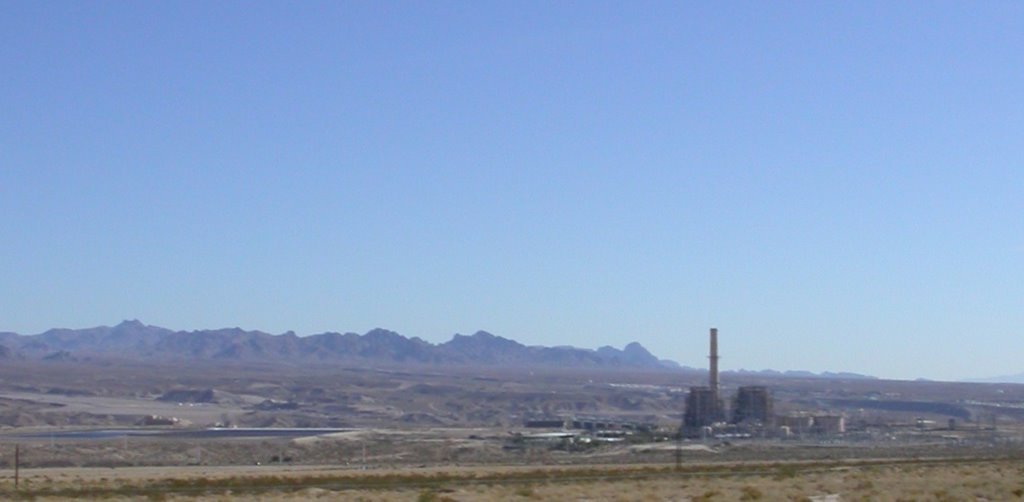
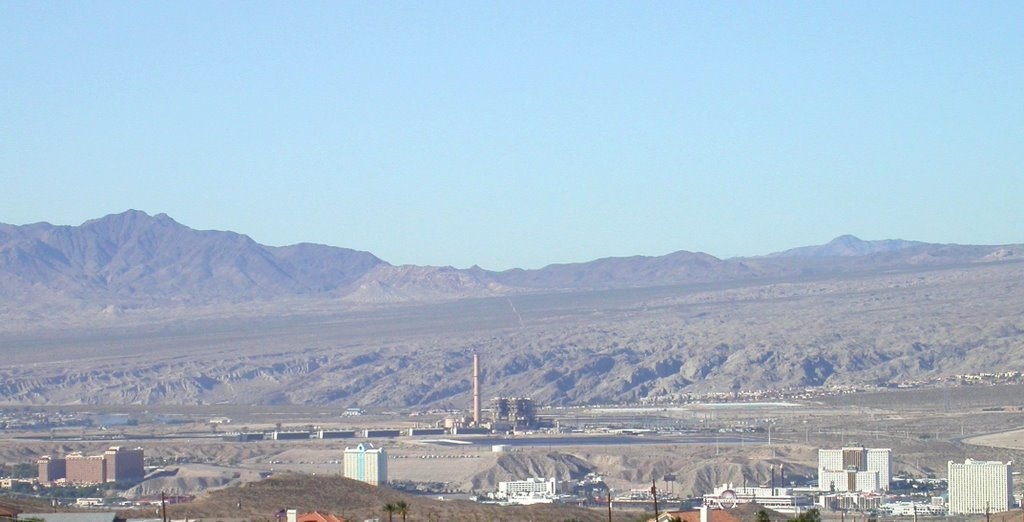
This is a picture of the Mojave Generating Station, near Laughlin, Nevada. As you can see, there is absolutely no pollution coming out the the smokestack... The reason you don't see anything, however, is because this coal fired power plant has been shut down.


The owners of this plant would rather shut it down than upgrade the pollution control equipment. Here's an indicator of what they really think about “clean” coal.


Of course, the power companies didn't actually shut it down on their own. They were forced to – after they lied in 1999 that they would put on the equipment... and after 6 years, still hadn't.


What? The coal industry lied!!! Need I be more sarcastic?


(Side note: This plant was one of the dirtiest emitters of mercury in the country. But the pollution control equipment wouldn't really have helped that.)


Ironically, in a way, I somewhat agree with the coal fired power industry. I feel that the pollution control equipment would been more or less a waste of money. All it would have done is transfer the pollution problem to the ground. Since it's physically impossible to make these poisons disappear with scrubber technology, all they would have accomplished would have been to keep them out of the air and concentrate them in a sludge pond.


Will sludge ponds leak? Absolutely. There is no such thing as a perfect container – and sludge ponds are far from perfect. 75% of US coal fired power plants use unlined, unmonitored landfills and surface impoundments.


The Mojave Generating Station may be shut down (for now), but the poisons it released will be here for us to deal with for a very long time... You can see this plant's sludge ponds in the picture (but you can see they're actual size much better on Google Earth). And, just in case you hadn't noticed, those “surface impoundments” (sludge ponds) are less than a mile from the Colorado River.